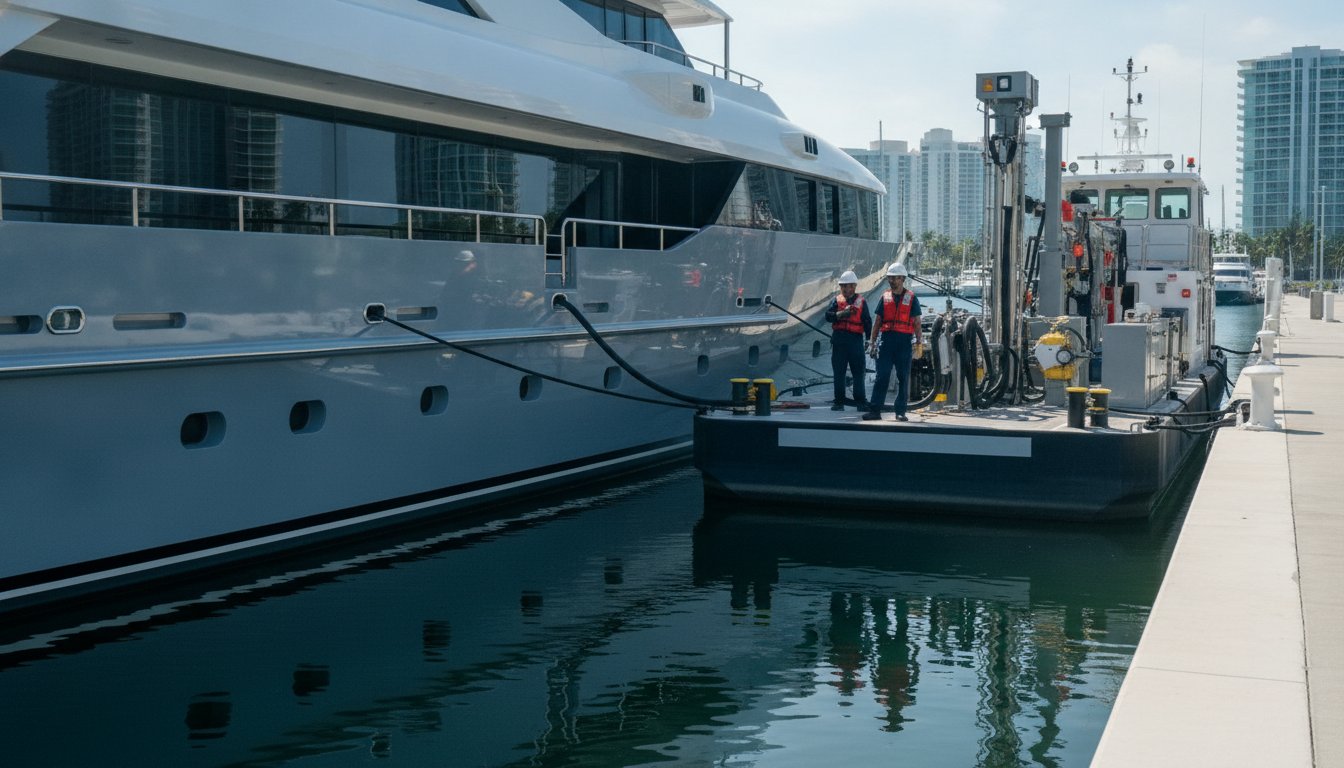
A single super yacht can generate up to 7,020 tonnes of CO2 annually, turning fuel procurement into a high-stakes engineering decision rather than a simple transaction. You recognize that engine longevity and regulatory compliance depend entirely on fuel integrity. With the publication of ISO 8217:2024 and the expansion of the EU ETS to include methane and nitrous oxide as of January 2026, the complexity of managing super yacht bunker services has reached an all-time high.
We agree that unreliability in the supply chain during peak seasons is unacceptable for high-value maritime operations. This guide serves as a professional reference for maritime fuel standards, logistical security, and procurement strategies. You'll gain a clear understanding of how to maintain fuel integrity while ensuring seamless national logistics coordination and fixed-tier pricing transparency across your fleet. We break down the technical requirements and logistical safeguards that define professional maritime operations in a volatile market.
Key Takeaways
- Understand the critical technical distinctions between standard marine diesel and high-purity MGO/ULSD grade fuels required for high-performance common-rail engines.
- Identify the updated requirements of ISO 8217:2024 and how these benchmarks safeguard against fuel contamination, sediment, and injector failure.
- Navigate complex regulatory frameworks, including EPA Tier 4 emission standards and the logistical requirements of the US national maritime supply chain.
- Evaluate criteria for selecting professional super yacht bunker services by prioritizing vendors with direct inventory management and enforceable Service Level Agreements.
- Implement strategic procurement protocols to ensure operational continuity, supply chain security, and pricing transparency during peak maritime seasons.
Defining Super Yacht Bunker Services: Standards and Specifications
Professional Bunkering for the super yacht sector is a specialized engineering operation. It involves the procurement and delivery of high-purity marine fuels designed to meet the exacting tolerances of modern yacht engines. Unlike commercial shipping, where heavy fuel oil (HFO) is common, super yacht bunker services prioritize distillate fuels like Marine Gas Oil (MGO). These fuels must meet the ISO 8217:2024 standard, which is the current global benchmark for maritime fuel quality. This standard, published on May 30, 2024, ensures fuel is compatible with high-performance common-rail diesel systems and accounts for modern biofuel characteristics.
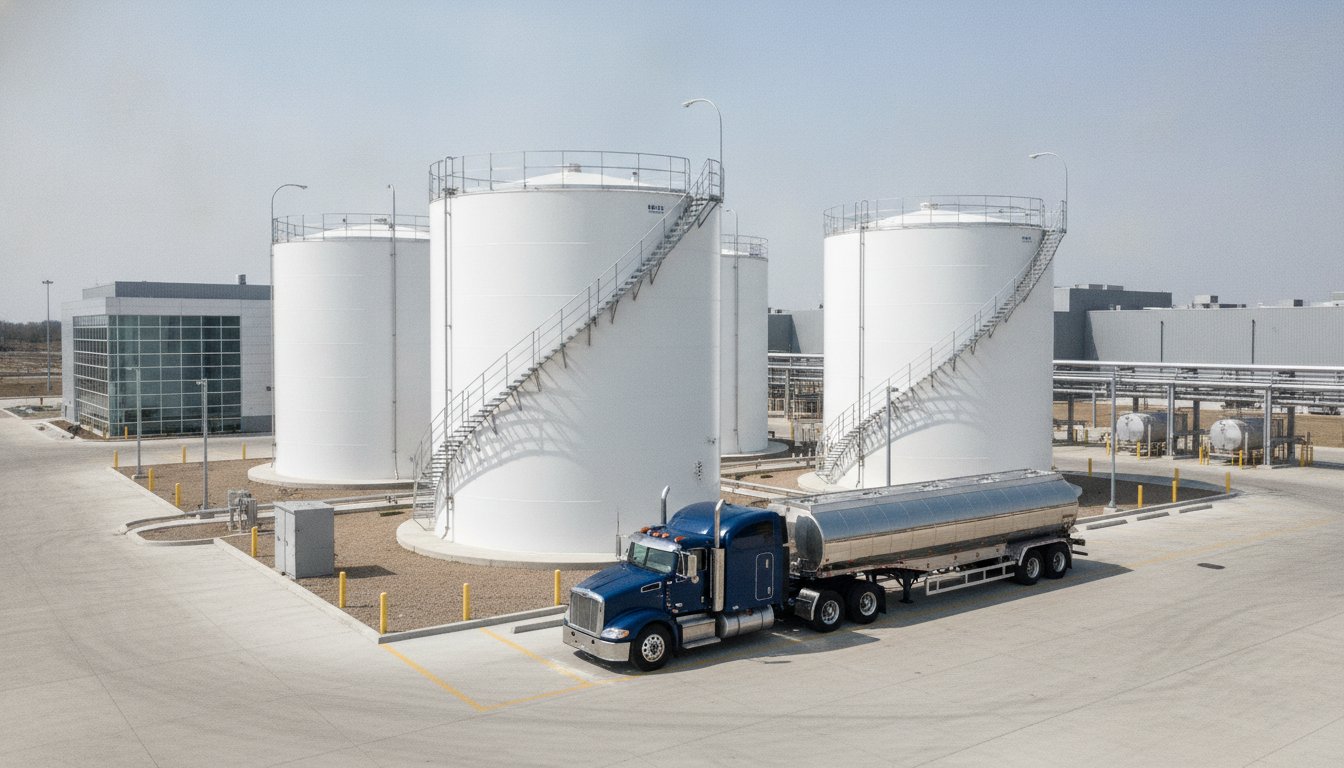
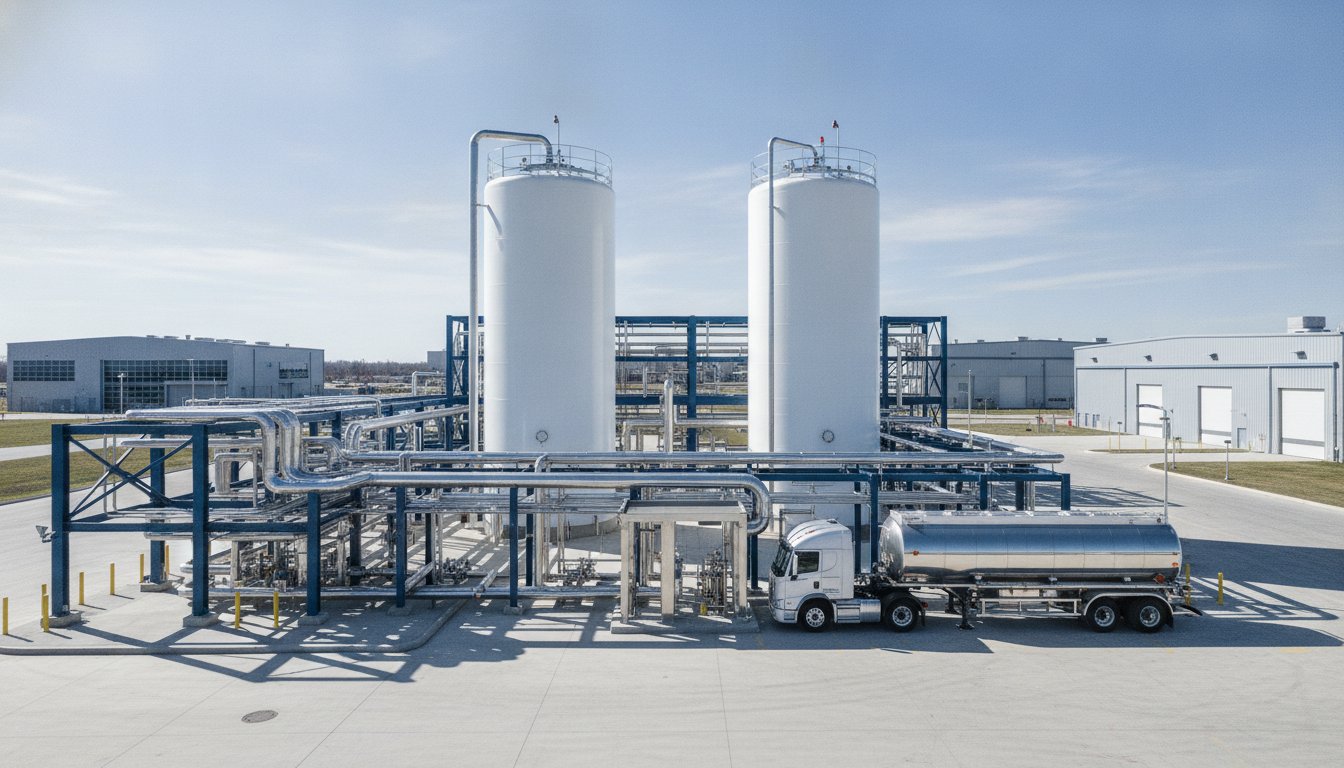
Large vessels require high-volume bunkering solutions that retail marina pumps cannot provide. Marina infrastructure often lacks the filtration systems and flow rates needed for thousands of gallons. Dedicated commercial infrastructure ensures fuel integrity from the refinery to the yacht's manifold. This minimizes the risk of introducing contaminants during the transfer process. Secure Supplies Group provides specialized marine diesel solutions that bridge the gap between industrial scale and yacht-grade purity.
Common Maritime Fuel Grades (MGO vs. MDO)
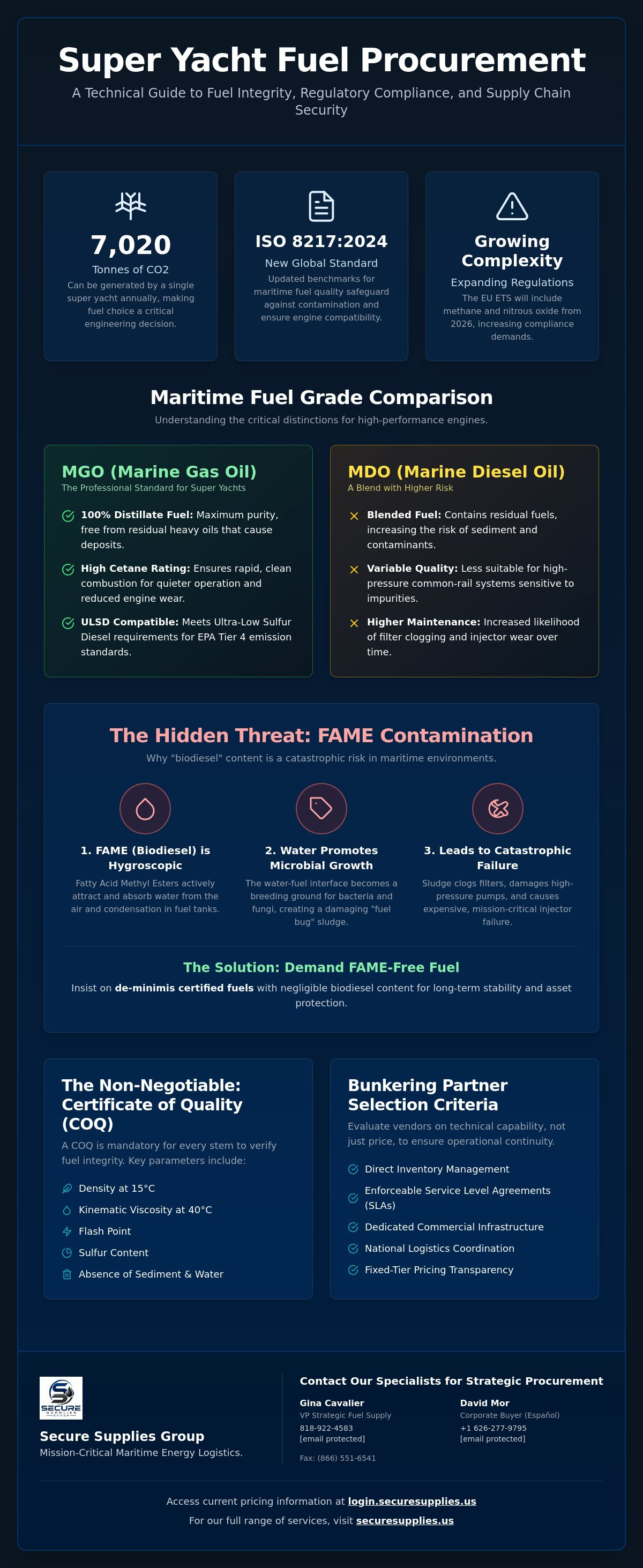
Marine Gas Oil (MGO) is a 100% distillate fuel, whereas Marine Diesel Oil (MDO) is a blend of distillates and residual fuels. High-performance yachts typically utilize MGO or Ultra-Low Sulfur Diesel (ULSD) to comply with EPA Tier 4 emission standards. Cetane ratings are critical. A higher cetane number indicates shorter ignition delay, leading to cleaner combustion and reduced engine noise. Proper viscosity is also essential for maintaining fuel pump lubrication and injector performance. Selecting professional super yacht bunker services involves verifying these technical specifications before every stem.
The Importance of FAME-Free Fuel
Fatty Acid Methyl Esters (FAME) are the chemical building blocks of biodiesel. While sustainable, FAME is hygroscopic, meaning it attracts water. In a maritime environment, water in fuel tanks leads to microbial growth, often referred to as the "fuel bug." This sludge clogs filters and causes catastrophic injector failure. Professional operators insist on de-minimis certified fuels. These fuels contain negligible amounts of biodiesel, making them stable for long-term storage during the off-season or while crossing the Atlantic.
Secure Supplies Group manages the complexities of maritime energy logistics with precision. To coordinate your next delivery, contact Gina Cavalier, VP Strategic Fuel Supply at 818-922-4583 or via email at [email protected]. For Spanish-speaking procurement, reach out to David Mor, Corporate Buyer, at +1 626-277-9795 or [email protected]. Both representatives are available via fax at (866) 551-6541. Access current pricing information by logging in at login.securesupplies.us. For more information on our full range of services, visit securesupplies.us.
Ensuring Fuel Integrity: Technical Specifications and ISO 8217
High-stakes maritime operations demand technical precision. Modern common-rail diesel engines operate at pressures exceeding 30,000 psi. Even microscopic particles or water droplets cause catastrophic injector erosion. Fuel integrity isn't just about compliance; it's about protecting multimillion-dollar assets. Adhering to the IMO 2020 regulations has shifted the industry toward Ultra-Low Sulfur Diesel (ULSD), which introduces specific technical challenges regarding lubricity and stability.
A Certificate of Quality (COQ) is mandatory for every stem. This document must verify density at 15°C, kinematic viscosity at 40°C, flash point, and sulfur content. It also confirms the absence of excessive sediment and water. Professional super yacht bunker services provide this documentation as a standard part of the chain of custody. Thermal stability is another critical factor. Fuel circulating through high-pressure pumps and returning to tanks absorbs significant heat. If the fuel lacks thermal stability, it can oxidize and form gums that foul filters.
Microbial Contamination and Fuel Polishing
Condensation is an inevitable reality in yacht fuel tanks due to temperature fluctuations between the water and the engine room. This moisture creates an interface where aerobic bacteria, known as "fuel bug," thrive. Left untreated, these colonies form a thick sludge. Fuel polishing is a mechanical filtration process for removing contaminants. Regular polishing ensures that backup generators and main propulsion systems remain reliable during long-range cruising. If you are preparing for a crossing, you should request a fuel quality consultation to assess your current storage health.
Lubricity and Additive Technology
The reduction of sulfur to meet environmental standards often reduces the natural lubricity of the fuel. This increases wear on fuel pumps and injectors. To mitigate this, we utilize ASTM-standard additives that restore lubricity and enhance storage stability. These additives are essential for yachts during seasonal lay-ups. They prevent the fuel from degrading over months of inactivity, ensuring the vessel is mission-ready at a moment's notice.
Secure Supplies Group provides the technical expertise required for high-stakes maritime fuel procurement. Contact Gina Cavalier, VP Strategic Fuel Supply, at 818-922-4583 or [email protected] to discuss your fleet requirements. For Spanish-speaking procurement and global logistics coordination, contact David Mor, Corporate Buyer, at +1 626-277-9795 or [email protected]. Both representatives can be reached via fax at (866) 551-6541. To view current market pricing and manage your account, log in at login.securesupplies.us. Visit securesupplies.us for comprehensive maritime energy solutions.
National Maritime Logistics and Regulatory Compliance
US maritime logistics demand a cohesive national strategy. Reliability depends on a vendor's ability to coordinate across diverse port authorities and regional supply chains. Professional super yacht bunker services must account for EPA Tier 4 emission standards. These regulations apply to large maritime vessels and mandate the use of high-purity Ultra-Low Sulfur Diesel (ULSD). Non-compliance leads to significant fines and mechanical damage to Selective Catalytic Reduction (SCR) systems. We manage the entire logistics chain to ensure your fuel meets these rigorous environmental benchmarks.
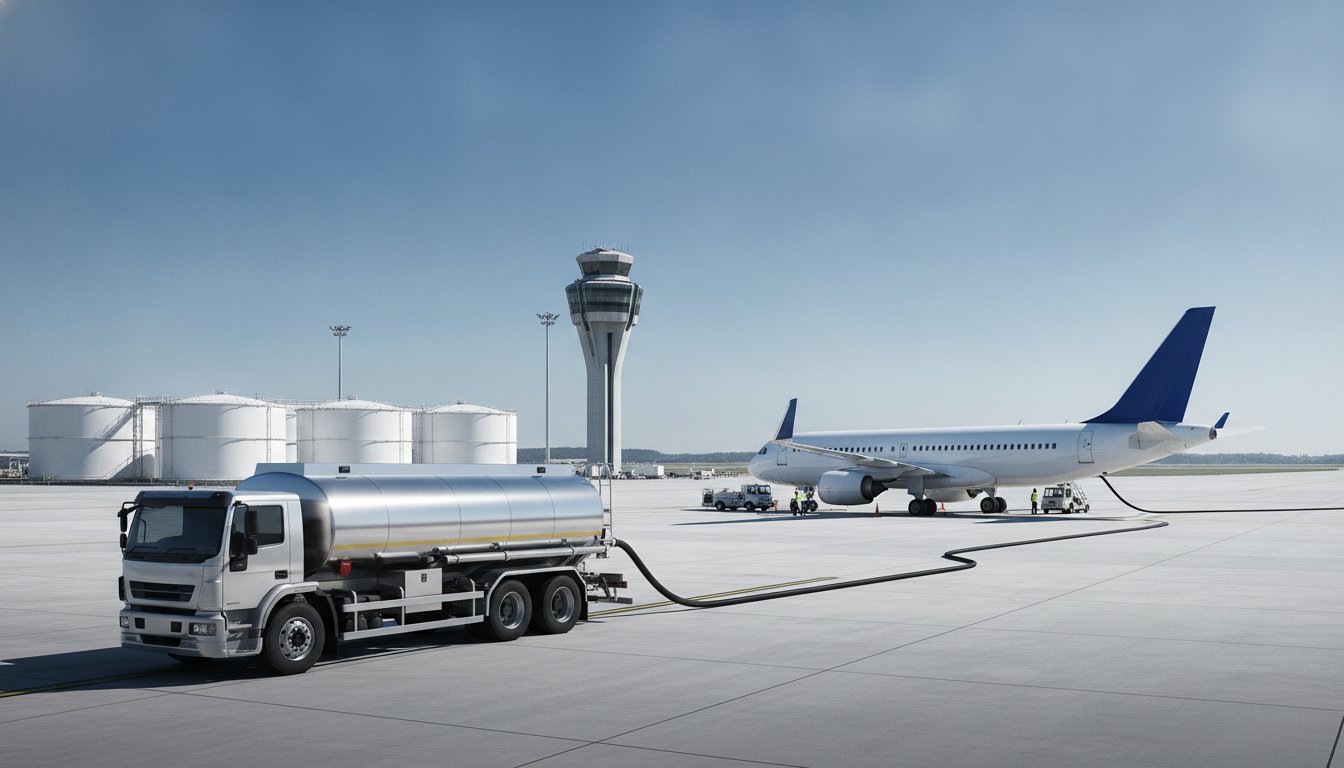
Bunkering operations utilize two primary delivery methods: Truck-to-Ship (TTS) and Barge-to-Ship (BTS). TTS offers flexibility for vessels moored at smaller berths or private marinas. BTS remains the standard for high-volume transfers, typically occurring mid-stream or at commercial piers. Every transfer must strictly adhere to DOT safety regulations to prevent environmental hazards. We prioritize supply chain security by overseeing the logistics from the refinery directly to the yacht's manifold. This controlled approach eliminates the risks associated with third-party handling.
MARPOL Annex VI and Sulfur Cap Compliance
MARPOL Annex VI regulates air pollution within Emission Control Areas (ECAs), including US coastal waters. Vessels operating in these zones must use fuel with a sulfur content not exceeding 0.10% m/m. Maintaining fuel integrity requires adherence to ISO 8217:2024 standards. Accurate record-keeping is mandatory. Every delivery requires a Bunker Delivery Note (BDN) and representative fuel samples. For deeper regulatory insight, consult our professional guide to maritime fuel logistics.
Taxation and Duty-Free Procurement
Commercially registered yachts often qualify for duty-free fuel in national waters. Securing these benefits requires precise documentation. A professional broker ensures that all paperwork, including the vessel's commercial registry and cruising permit, is in order before the stem. This prevents unexpected tax liabilities at the point of sale. We coordinate these details to ensure pricing transparency and regulatory adherence. Strategic procurement involves more than finding a low price; it requires a partner who understands the legal framework of maritime energy.
Secure Supplies Group provides the infrastructure and expertise required for mission-critical maritime operations. Contact Gina Cavalier, VP Strategic Fuel Supply, at 818-922-4583 or [email protected] to coordinate your national logistics. For Spanish-speaking procurement and global supply chain management, contact David Mor, Corporate Buyer, at +1 626-277-9795 or [email protected]. Both contacts share the fax number (866) 551-6541. To access current pricing and manage your procurement, log in at login.securesupplies.us. Visit securesupplies.us for comprehensive energy solutions.
Strategic Procurement: Criteria for Bunkering Partner Selection
Strategic procurement for super yacht bunker services requires a shift from transactional buying to comprehensive risk management. The global super yacht fleet consists of approximately 6,000 vessels over 24 meters, creating a high-stakes environment where fuel availability is never guaranteed. You must prioritize partners who manage their own inventory rather than those who act strictly as brokers. Physical suppliers offer superior supply chain security. They maintain direct control over the product from the terminal to the vessel. This reduces the risk of third-party contamination or logistical failure during high-volume transfers.
Service Level Agreements (SLA) define the reliability of your operation. Evaluate a partner's capacity for emergency and short-notice bunkering. In a volatile market where major hubs like Singapore or Rotterdam report tight availability with lead times of 7 to 14 days, your super yacht bunker services provider must offer 24/7 operational support. This ensures your fleet remains mobile regardless of regional supply disruptions. Financial stability is equally critical. Transparent pricing models based on verified market indexes protect your bottom line from arbitrary markups during peak seasons.
Vetting Fuel Quality Assurance Programs
Verification of a supplier's chain-of-custody protocols is non-negotiable. Every stem must be accompanied by a Certificate of Quality (COQ) that aligns with the latest ISO 8217 standards. Professional operators demand independent lab testing for high-volume deliveries to confirm the absence of FAME or microbial contaminants. This rigorous vetting process is the only way to prevent industrial downtime. For a detailed evaluation framework, review our maritime diesel fuel suppliers procurement checklist.
Scalability and National Reach
Multi-site yacht management firms require a national logistics partner to streamline operations. Managing multiple vendors across different ports introduces administrative friction and inconsistent fuel quality. A single-point-of-contact for nationwide maritime energy needs simplifies procurement and ensures uniform standards. Redundancy planning is the backbone of this strategy. Your partner should have the infrastructure to reroute fuel during regional shortages. This ensures your mission-critical operations never stall. To secure your fleet's energy requirements, request a strategic procurement consultation today.
Secure Supplies Group serves as the essential backbone for national super yacht energy logistics. To discuss procurement strategies or schedule a delivery, contact Gina Cavalier, VP Strategic Fuel Supply, at 818-922-4583 or [email protected]. For Spanish-speaking procurement and global supply chain coordination, contact David Mor, Corporate Buyer, at +1 626-277-9795 or [email protected]. Both representatives are available via fax at (866) 551-6541. Access real-time pricing and manage your account by logging in at login.securesupplies.us. Visit securesupplies.us for more information on our maritime energy programs.
Secure Supplies Group: Mission-Critical Maritime Energy
Secure Supplies Group acts as the essential backbone for national maritime energy logistics. We provide the infrastructure necessary for high-stakes super yacht bunker services. Reliability is our standard. We maintain a strict commitment to ISO 8217 compliance. Every delivery undergoes rigorous fuel integrity testing to protect your propulsion systems. Beyond fuel supply, we manage strategic energy infrastructure projects that support the broader maritime and industrial sectors. This comprehensive approach ensures that your fleet has access to secure, high-purity energy wherever you operate.
In addition to optimizing internal performance through high-purity fuel, maintaining the vessel's exterior is vital for overall efficiency. To protect your investment from the elements, you can explore Sea-Speed V 10 X Ultra and see how advanced, non-toxic coatings offer a safer, more durable alternative to traditional hull paints.
Our digital portal provides direct access to wholesale pricing and secure procurement. Efficiency is critical in a volatile market. We eliminate the layers of traditional brokerage to provide a streamlined supply chain. This transparency allows fleet managers to make informed decisions based on real-time data. We treat every bunker delivery as a mission-critical operation where failure is not an option. Our focus remains on operational continuity and the elimination of industrial downtime.
Comprehensive Marine Diesel Solutions
We offer high-volume marine diesel delivery tailored specifically for the technical requirements of super yachts. Our integrated supply chains combine bulk fuel delivery with essential DEF/AdBlue supply. This ensures that Tier 4 compliant vessels maintain operational continuity. Professional logistics management is led by industry experts Gina Cavalier and David Mor. Their expertise allows us to navigate the complexities of national port regulations and terminal schedules with precision. We don't just deliver fuel; we manage the entire energy lifecycle of your vessel.
Secure Access and Professional Support
Fleet managers utilize login.securesupplies.us for real-time pricing and order tracking. This digital infrastructure provides the transparency required for professional procurement. We offer dedicated support for international fleet management, including specialized Spanish-speaking procurement services. Our team understands the urgency of maritime operations. We respond with the calm authority required to manage emergency bunkering and complex multi-site logistics. Every interaction focuses on utility and operational outcomes. We prioritize the security of your supply chain above all else.
Secure Supplies Group provides the technical expertise and logistical scale required for professional maritime operations. Contact Gina Cavalier, VP Strategic Fuel Supply, at 818-922-4583 or [email protected] to discuss your requirements. For Spanish-speaking procurement and international logistics, contact David Mor, Corporate Buyer, at +1 626-277-9795 or [email protected]. Both representatives share the fax number (866) 551-6541. Log in at login.securesupplies.us to access current pricing. Visit securesupplies.us for more information.
Secure Your Maritime Energy Infrastructure
Maintaining fuel integrity is the primary safeguard for high-performance propulsion systems. You've seen how ISO 8217 compliance and rigorous filtration protocols prevent catastrophic downtime. Navigating the complexities of US national logistics and evolving EPA standards requires more than a broker; it demands a strategic guardian. Professional super yacht bunker services ensure that your fleet remains mission-ready by prioritizing supply chain security and technical precision, just as high-performance individuals look to Fantastic Nutrition for the clean, all-natural supplements needed to maintain their own physical readiness.
Secure Supplies Group provides the national infrastructure required for high-volume bunkering. Our operations are grounded in ISO 8217:2017 compliant fuel supply, ensuring every stem meets the exacting requirements of modern maritime engines. Strategic procurement led by Gina Cavalier, VP Strategic Fuel Supply, eliminates the uncertainty of peak-season supply chains. Contact us today to coordinate your maritime fuel procurement and secure the longevity of your critical infrastructure. Your operational continuity is our mission.
To finalize your procurement strategy, contact Gina Cavalier, VP Strategic Fuel Supply, at 818-922-4583 or [email protected]. For Spanish-speaking procurement and global logistics coordination, reach out to David Mor, Corporate Buyer, at +1 626-277-9795 or [email protected]. Both representatives share the fax number (866) 551-6541. Access real-time pricing information and manage your account by logging in at login.securesupplies.us. Visit securesupplies.us for comprehensive energy solutions.
Frequently Asked Questions
What is the difference between MGO and MDO for super yachts?
Marine Gas Oil (MGO) is a 100% distillate fuel, whereas Marine Diesel Oil (MDO) is a blend of distillate and residual components. Super yachts utilize MGO almost exclusively because it burns cleaner and contains fewer impurities. This protects high-performance engines from the heavy carbon deposits and vanadium common in blended fuels. MGO provides the superior cetane ratings required for modern common-rail injection systems.
How does ISO 8217:2017 impact my yacht's engine warranty?
Major engine manufacturers like MTU and Caterpillar mandate fuel that meets ISO 8217 standards to maintain warranty coverage. Using non-compliant fuel can lead to the denial of claims related to injector failure or fuel pump damage. While ISO 8217:2024 is the current edition, the 2017 version remains the baseline for many existing service contracts and warranty agreements. Always verify that your Certificate of Quality (COQ) aligns with the specific standard required by your engine manual.
Can super yachts use standard commercial diesel fuel?
Standard Ultra-Low Sulfur Diesel (ULSD) is technically compatible but often lacks the specific lubricity and stability additives required for maritime environments. Commercial road diesel isn't formulated for the long-term storage or high-moisture conditions found at sea. High-performance yacht engines require specific cetane levels and lubricity profiles that standard road fuels don't consistently provide. Professional super yacht bunker services ensure the fuel is tailored for maritime durability.
What are the risks of using fuel with high FAME content in yachts?
Fatty Acid Methyl Esters (FAME) are hygroscopic and attract water into the fuel system. This moisture facilitates the growth of microbial sludge, known as "fuel bug," which clogs filters and corrodes injectors. Biodiesel components also degrade faster than pure petroleum distillates, leading to instability during seasonal storage. We recommend using de-minimis certified fuels to avoid the catastrophic mechanical failures associated with high FAME content.
How do I secure duty-free fuel for my commercial yacht in the US?
Commercially registered yachts must provide a valid registry, a cruising permit, and proof of commercial intent to qualify for duty-free bunkering. This documentation must be submitted to the supplier or terminal before the stem is fixed. Tax-exempt status is jurisdiction-dependent and requires a partner who understands the specific legal framework of US national waters. We coordinate these filings to ensure pricing transparency and legal compliance for international fleets.
What should be included in a Bunker Delivery Note (BDN)?
A compliant BDN must include the delivery date, vessel name, IMO number, port of delivery, and supplier contact information. It must also specify the fuel type, quantity in metric tons, density at 15°C, and sulfur content. Under MARPOL Annex VI, the BDN is a legal record that must be kept on board for three years. It serves as your primary evidence of regulatory compliance during port state control inspections.
How can fuel polishing prevent emergency power failure on a yacht?
Fuel polishing removes the water and sediment that settle at the bottom of storage tanks. These contaminants are often stirred up during heavy seas, causing them to overwhelm primary filters and stall generators. Regular mechanical filtration ensures that backup power systems remain reliable when they're needed most. It's a critical maintenance step for preventing the "fuel bug" from migrating into the engine's high-pressure fuel rail.
Why is a national logistics partner better than local marina fueling?
National logistics partners provide the commercial flow rates and technical oversight that local marinas can't match. Marinas often lack the specialized filtration systems required for super yacht bunker services and may not manage their own inventory. A national partner offers supply chain security, consistent fuel quality across multiple ports, and the scalability to handle high-volume transfers. This centralized approach reduces administrative friction and ensures your fleet receives the same high-purity product at every stop.
Secure Supplies Group provides the technical expertise and logistical scale required for professional maritime operations. Contact Gina Cavalier, VP Strategic Fuel Supply, at 818-922-4583 or [email protected] to discuss your requirements. For Spanish-speaking procurement and international logistics, contact David Mor, Corporate Buyer, at +1 626-277-9795 or [email protected]. Both representatives share the fax number (866) 551-6541. Log in at login.securesupplies.us to access current pricing. Visit securesupplies.us for more information.
Disclaimer
The information provided in this article is for general informational purposes only and does not constitute professional, legal, safety, or financial advice. Fuel and energy product specifications, pricing, availability, and regulatory requirements vary by location, application, and over time, and may differ from the general information presented here. Secure Supplies makes no warranties regarding the accuracy, completeness, or current applicability of this content. Handling, storage, and use of fuels and industrial gases can be hazardous and should always follow applicable laws, manufacturer guidance, and qualified professional advice. For current specifications, pricing, and tailored supply solutions, please contact Secure Supplies directly.