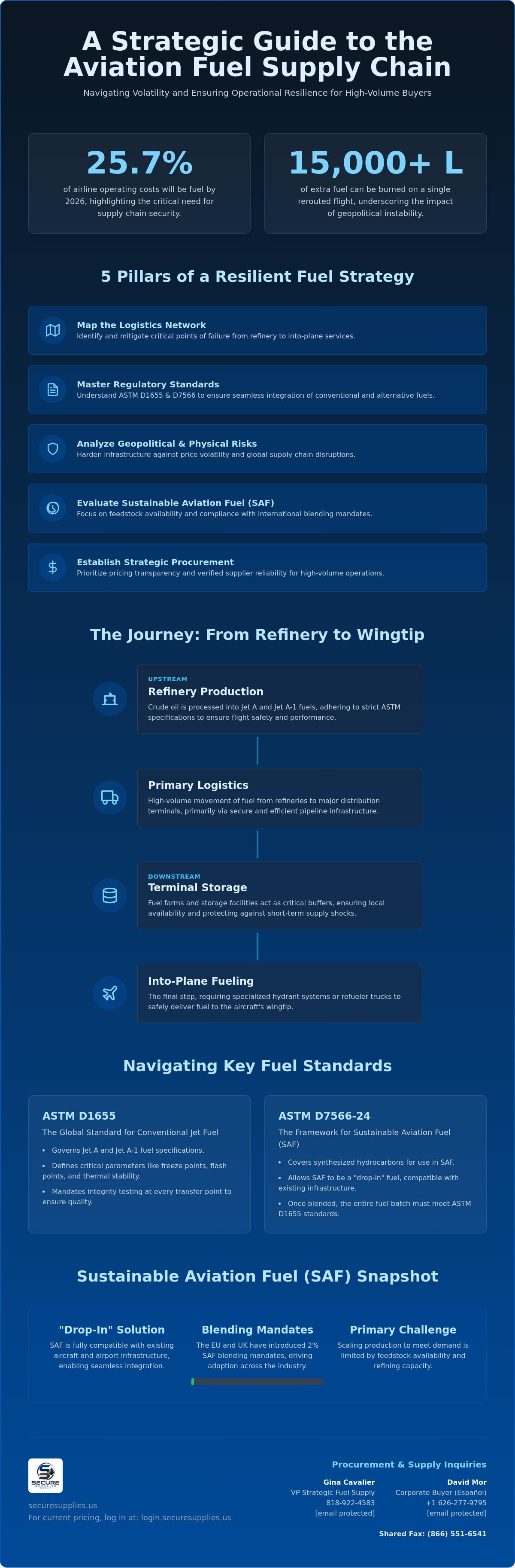
Fuel accounts for 25.7% of airline operating costs in 2026, yet a single geopolitical shift can force reroutes that burn an additional 15,000 liters of fuel per flight. You understand that maintaining a resilient aviation fuel supply chain isn't just a procurement goal; it's a mission-critical requirement for operational survival. Volatility is the new baseline. You need a strategy that prioritizes security and anticipates disruption before it grounds your fleet.
This analysis delivers a strategic roadmap for the coming year. You'll gain a clear understanding of the logistics required to move fuel from refinery to wingtip while meeting strict ASTM D1655 and ASTM D7566-24 standards. We'll break down the realities of SAF integration, from the 2% blending mandates in the EU and UK to the practicalities of multi-site distribution. We'll examine how to verify supplier reliability and build a compliant, redundant fuel strategy that stands up to global pressure.
Key Takeaways
- Map the multi-stage logistics network from refinery production to into-plane services to identify and mitigate critical points of failure.
- Master the regulatory distinctions between ASTM D1655 and ASTM D7566 to ensure seamless integration of alternative fuels into your aviation fuel supply chain.
- Analyze how geopolitical instability and physical bottlenecks disrupt global energy flows; use these insights to harden your infrastructure against price volatility.
- Evaluate Sustainable Aviation Fuel (SAF) as a drop-in solution, focusing on feedstock availability and compliance with international blending mandates.
- Establish a strategic procurement framework that prioritizes transparency in pricing and verified supplier reliability for high-volume operations.
The Architecture of the Modern Aviation Fuel Supply Chain
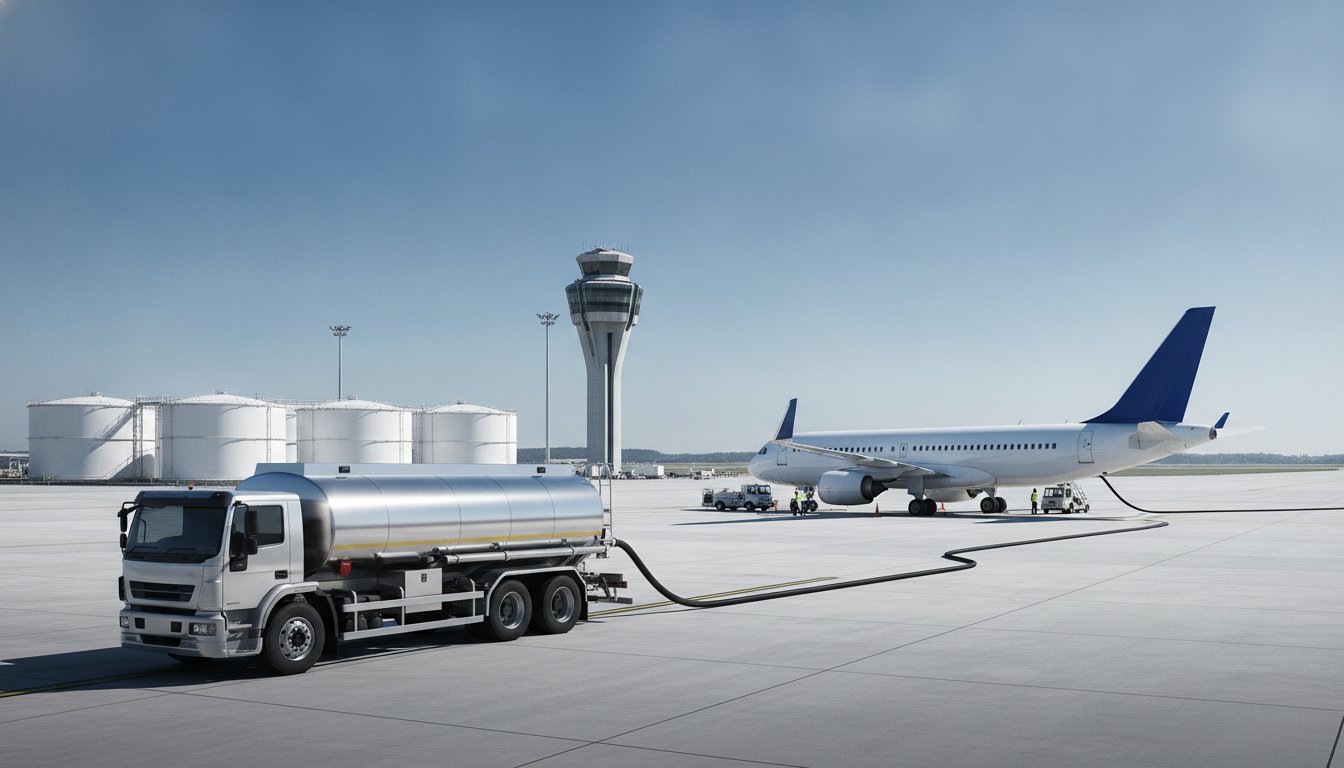
The aviation fuel supply chain functions as a complex, multi-stage logistics network. It spans the entire journey from crude oil extraction and refining to the final into-plane delivery at the wingtip. Every link in this chain must operate with absolute precision to maintain operational continuity. Reliability isn't a luxury; it's a mission-critical requirement. The system is traditionally divided into upstream and downstream segments. Upstream logistics focus on production and bulk movement, while downstream logistics handle airport-specific distribution and storage. Secure bulk fuel delivery provides the essential backbone for national aviation hubs, ensuring that massive volume requirements are met without interruption or quality degradation.
Upstream Production and Primary Logistics
Refineries serve as the primary source of finished product, processing crude oil into Jet A and Jet A-1 fuels. These facilities must adhere to exact ASTM specifications to ensure flight safety. Refinery capacity and location directly impact the stability of the entire aviation fuel supply chain. Any localized disruption at the refinery level creates immediate ripple effects across the network. Primary logistics involve the high-volume movement of fuel from these refineries to major distribution terminals. Pipeline infrastructure remains the most efficient and secure method for this movement. It offers a continuous flow that is less susceptible to the logistical bottlenecks common in rail or truck transport. Strategic planning at this stage focuses on maintaining high-volume throughput and managing regional supply balances.
Downstream Distribution and Storage Facilities
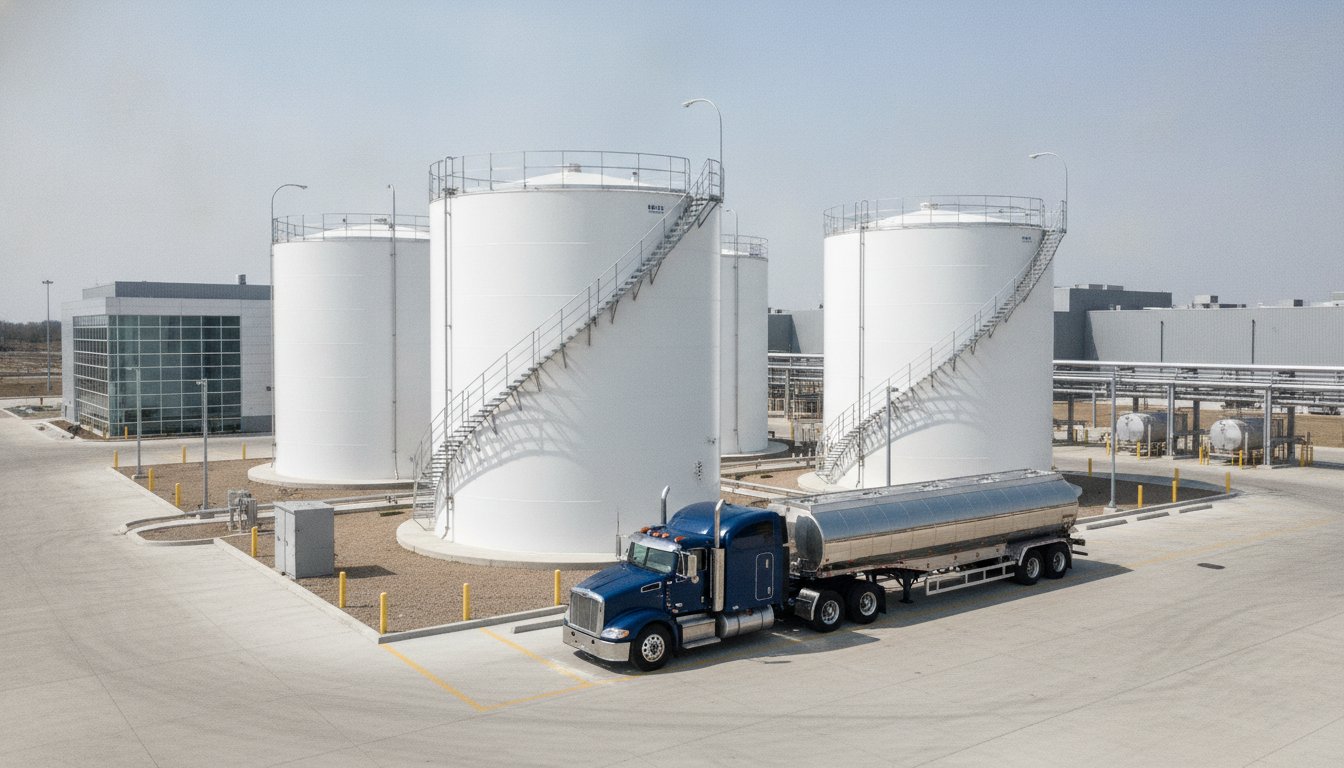
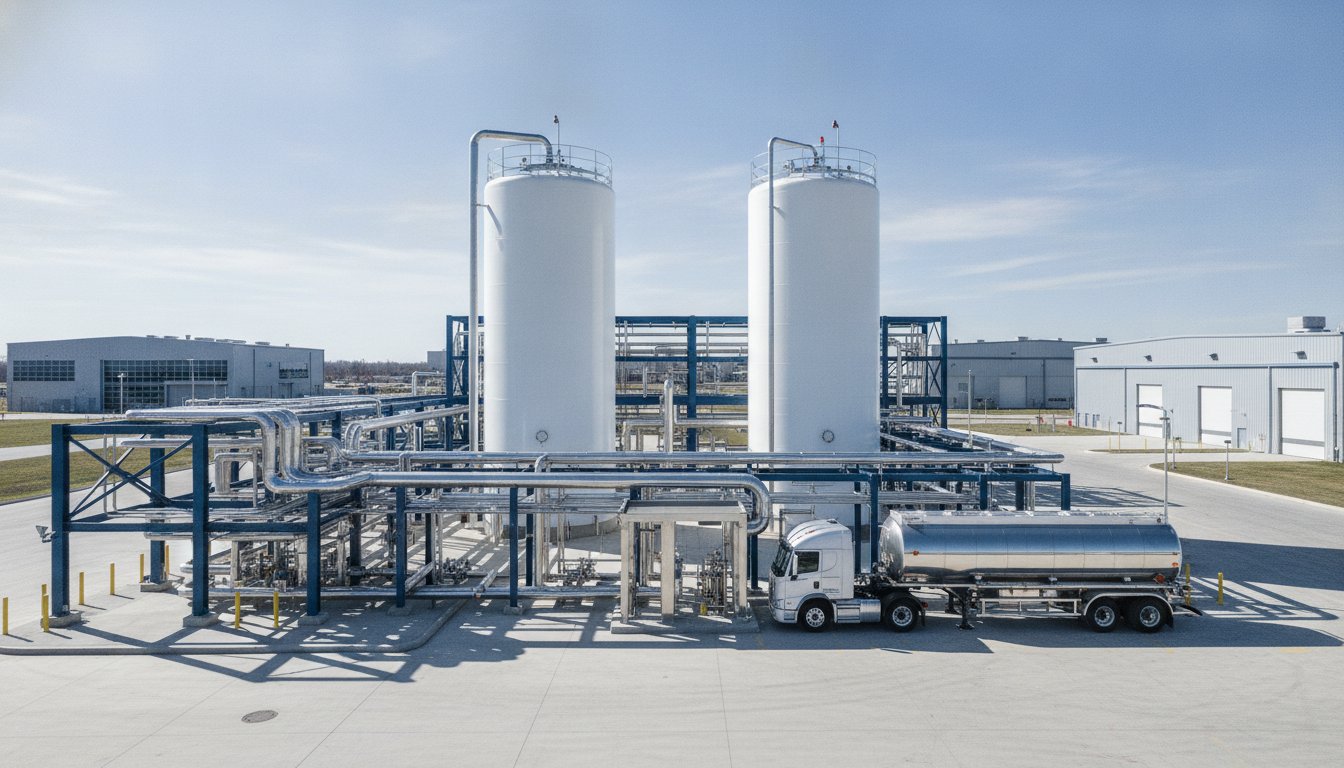
Downstream logistics manage the transition from bulk storage to the airfield. Fuel farms and terminal storage facilities act as critical buffers. They ensure local availability and protect against short-term supply shocks. These facilities must be managed with a focus on quality control and inventory turnover. The final step is "into-plane" fueling, which requires specialized equipment and trained personnel. This process involves either underground hydrant systems at major hubs or high-capacity refueler trucks at smaller facilities. For remote or industrial airfields, the challenge is even greater. These locations often require dedicated energy infrastructure to handle the unique storage and dispensing needs of specialized operations. Success in the downstream segment depends on meticulous planning and a "zero-failure" mindset.
Contact Gina Cavalier, VP Strategic Fuel Supply, at 818-922-4583 or [email protected] to secure your operations. For Spanish-speaking procurement needs, contact David Mor, Corporate Buyer for Secure Supplies Group, at +1 626-277-9795 or [email protected]. Both contacts are available via fax at (866) 551-6541. Log in at login.securesupplies.us to access current pricing information and visit securesupplies.us for comprehensive fuel solutions.
Technical Standards and Regulatory Compliance
ASTM International establishes the technical baseline for every gallon of fuel loaded into an aircraft. Without these global specifications, the aviation fuel supply chain would lack the necessary standardization to ensure engine performance and safety. ASTM D1655 governs conventional Jet A and Jet A-1. In contrast, ASTM D7566-24 provides the framework for Sustainable Aviation Fuel (SAF) containing synthesized hydrocarbons. Once a batch of SAF is certified under D7566 and blended, it's considered equivalent to conventional jet fuel and must then meet D1655 requirements for distribution. This crossover ensures that alternative fuels don't compromise existing infrastructure or engine hardware.
ASTM D1655: The Standard for Operational Continuity
Strict chemical and physical requirements define Jet A and Jet A-1. These standards focus on critical parameters like freeze points, flash points, and thermal stability. Integrity testing at every transfer point is non-negotiable. Fuel integrity is the maintenance of chemical purity from refinery to wingtip. If a batch fails to meet these parameters at the airport terminal, the entire supply is grounded. Managers must prioritize Micro-Separometer (MSEP) ratings and conductivity checks to prevent electrostatic discharge and water contamination during high-volume transfers.
Environmental and Safety Oversight
Federal oversight extends beyond chemical composition. The EPA Clean Air Act mandates vapor recovery and strict emissions controls at bulk terminals to protect air quality. Simultaneously, Spill Prevention, Control, and Countermeasure (SPCC) plans are required for any facility with significant storage capacity. These regulations mirror the rigor found in industrial gas supply chain security, where containment and leak detection are paramount. DOT requirements further complicate logistics. All bulk transport must comply with 49 CFR parts 100 to 185, which mandate specialized tanker specifications, clear placarding, and hazardous material training for all personnel. Failure to comply leads to heavy fines and immediate stop-work orders. Evaluating your site's adherence to these standards is a prerequisite for long-term operational safety; you can request a compliance-focused supply consultation to audit your current logistics.
Contact Gina Cavalier, VP Strategic Fuel Supply, at 818-922-4583 or [email protected] to secure your operations. For Spanish-speaking procurement needs, contact David Mor, Corporate Buyer for Secure Supplies Group, at +1 626-277-9795 or [email protected]. Both contacts are available via fax at (866) 551-6541. Log in at login.securesupplies.us to access current pricing information and visit securesupplies.us for comprehensive fuel solutions.
Analyzing Vulnerabilities: Geopolitical Risk and Bottlenecks
Operational stability depends on recognizing that the aviation fuel supply chain is inherently fragile. The IATA Jet Fuel Price Monitor recorded a 58.4% price surge in a single week following Middle Eastern strikes in 2026. This volatility isn't an anomaly; it's a structural risk. Relying on "just-in-time" delivery models creates unacceptable exposure for mission-critical operations. When pipelines fail or ports congest, the lack of on-site redundancy leads to immediate grounding. High-volume buyers must transition toward strategic bulk fuel logistics to manage national supply fluctuations and secure their operational future.
The Impact of Geopolitical Volatility
International conflicts do more than raise prices; they force radical logistical shifts. Bypassing conflict zones in the Middle East adds up to 120 minutes of flying time. This rerouting burns an additional 8,000 to 15,000 liters of jet fuel per flight. These operational burdens are compounded by soaring insurance premiums for tankers moving through high-risk corridors. National strategic reserves provide a temporary buffer, but they don't replace the need for multi-source procurement. Diversifying your supply origin is the only way to mitigate the risk of a single-point failure in the global energy market. Reliability requires a proactive, multi-layered approach to sourcing.
Logistical Bottlenecks and Infrastructure Decay
Physical constraints within the United States present a different set of challenges. Aging energy infrastructure, including narrow pipeline corridors and deteriorating terminal facilities, creates persistent bottlenecks. These vulnerabilities are often exposed during periods of peak demand or extreme weather. Secondary distribution is equally at risk due to persistent labor shortages in the specialized trucking sector. Maintaining trucking fleet fueling resilience is essential to close the gap between major terminals and regional airfields. Without a robust ground transport network, even a surplus of fuel at the refinery won't reach the wingtip. You must audit every physical link in your delivery loop to identify where decay or labor gaps could halt your operations.
Contact Gina Cavalier, VP Strategic Fuel Supply, at 818-922-4583 or [email protected] to secure your operations. For Spanish-speaking procurement needs, contact David Mor, Corporate Buyer for Secure Supplies Group, at +1 626-277-9795 or [email protected]. Both contacts are available via fax at (866) 551-6541. Log in at login.securesupplies.us to access current pricing information and visit securesupplies.us for comprehensive fuel solutions.
The SAF Transition: Logistical Realities and Trends
Sustainable Aviation Fuel (SAF) provides a critical "drop-in" solution for modern fleets. It remains chemically compatible with existing turbine engines and requires no hardware modifications. However, the logistical path for SAF is a dual-track reality in 2026. While the EU and UK enforce a 2% SAF blending mandate, the global supply remains tight. Neat SAF, produced from feedstocks like used cooking oils and agricultural residues, must be mixed with conventional jet fuel at levels up to 50% before entering the standard distribution network. This ensures the aviation fuel supply chain maintains the same safety and performance standards established by ASTM D1655.
Feedstock Scarcity and Scalability Challenges
Global SAF production is projected to reach 2.4 million metric tons in 2026. This is a significant milestone, yet it meets only a fraction of total aviation demand. Competition for limited feedstocks is intensifying. The aviation sector now competes directly with the maritime industry for waste oils and fats. This cross-sector demand creates price pressure and supply bottlenecks. Understanding maritime fuel logistics is essential for aviation buyers to anticipate feedstock availability shifts. Scalability depends on diversifying feedstocks beyond waste oils to include synthetic fuels and biomass.
Integrating SAF into Existing Infrastructure
The primary advantage of SAF is its ability to utilize existing pipelines, storage tanks, and hydrant systems. Once blended, it flows through the aviation fuel supply chain without specialized handling. The challenge lies in the upstream logistics of transporting neat SAF to certified blending hubs. These movements often involve higher transportation costs and specialized oversight. We see similar logistical patterns in the deployment of CNG / LNG programs, where infrastructure readiness determines adoption speed. For many operators, the "Book and Claim" system offers a way to decouple physical fuel delivery from carbon reduction credits. This allows you to pay for SAF in one region while uplifting conventional fuel elsewhere, optimizing logistics costs. To evaluate how these trends impact your 2026 procurement, request a strategic SAF integration audit.
Contact Gina Cavalier, VP Strategic Fuel Supply, at 818-922-4583 or [email protected] to secure your operations. For Spanish-speaking procurement needs, contact David Mor, Corporate Buyer for Secure Supplies Group, at +1 626-277-9795 or [email protected]. Both contacts are available via fax at (866) 551-6541. Log in at login.securesupplies.us to access current pricing information and visit securesupplies.us for comprehensive fuel solutions.
Securing High-Volume Aviation Fuel Procurement
High-volume procurement in the modern market demands a departure from transactional spot-market purchasing. You need a partner capable of managing the entire aviation fuel supply chain with a focus on long-term resilience. Reliability at scale is the only metric that matters when your operations depend on consistent wingtip delivery. Strategic procurement involves more than just price negotiation. It requires a rigorous audit of the supplier's physical assets, terminal access, and logistical redundancy. Transparency in supply chain tracking ensures that every gallon meets the required ASTM specifications before it reaches your facility. Dedicated fueling programs provide the stability needed to protect your bottom line from the volatility inherent in global energy flows.
Strategic Selection of Logistics Partners
Selecting a partner for large-scale operations requires a deep dive into their technical capabilities. Evaluate potential suppliers based on their track record with complex energy infrastructure projects. You need a "logistics architect" who understands the big picture of national energy security while managing the minute details of daily delivery. Prioritize partners with a demonstrated national reach and the ability to support multi-site industrial operations. Reliability in mission-critical sectors isn't negotiable. Secure Supplies Group provides the essential backbone for these functions, offering comprehensive fueling programs tailored to high-volume requirements. You can contact Secure Supplies Group to begin a strategic evaluation of your current supply needs.
Accessing Market Pricing and Procurement
Real-time data is the foundation of a successful procurement budget. In a volatile market where fuel accounts for over 25% of operating costs, delayed information is a liability. You must have immediate access to regional benchmarks and indexed contract data to mitigate price shocks. Secure Supplies Group provides the tools necessary for informed decision-making. We position our team as your strategic guardian, ensuring that your aviation fuel supply chain remains both compliant and cost-effective. Direct access to current market information is essential for maintaining operational continuity. Log in at login.securesupplies.us to access current pricing information and verify supplier reliability standards.
Contact Gina Cavalier, VP Strategic Fuel Supply, at 818-922-4583 or [email protected] to secure your operations. For Spanish-speaking procurement needs, contact David Mor, Corporate Buyer for Secure Supplies Group, at +1 626-277-9795 or [email protected]. Both contacts are available via fax at (866) 551-6541. Log in at login.securesupplies.us to access current pricing information and visit securesupplies.us for comprehensive fuel solutions.
Hardening Your Operations for a Volatile Energy Future
Securing the aviation fuel supply chain requires a transition from reactive procurement to strategic architecture. You've seen how geopolitical shifts and infrastructure decay create immediate operational risks. Success in 2026 depends on your ability to balance conventional Jet A-1 reliability with the evolving mandates of the SAF transition. You must prioritize redundancy, audit your physical delivery loops, and maintain unwavering compliance with ASTM, EPA, and DOT standards. These aren't just regulatory hurdles; they're the benchmarks of a resilient operation.
Operational continuity isn't a passive state; it's a result of meticulous planning and expert partnership. Secure Supplies Group manages mission-critical fuel programs for industrial sectors with deep expertise in national energy infrastructure projects. We act as your strategic guardian in a volatile market, ensuring your supply remains steady regardless of global pressure. For strategic aviation fuel procurement and national logistics, contact Secure Supplies Group today to stabilize your future supply. Your infrastructure is too critical to leave to chance.
Contact Gina Cavalier, VP Strategic Fuel Supply, at 818-922-4583 or [email protected]. For Spanish-speaking procurement, contact David Mor, Corporate Buyer for Secure Supplies Group, at +1 626-277-9795 or [email protected]. Both contacts share the fax number (866) 551-6541. Log in at login.securesupplies.us to access current pricing information and visit securesupplies.us for comprehensive fuel solutions.
Frequently Asked Questions
What are the primary components of the aviation fuel supply chain?
The aviation fuel supply chain consists of refinery production, primary transport via pipelines or tankers, secondary terminal storage, and final into-plane services. Each stage requires meticulous quality control to maintain ASTM standards. Upstream segments focus on bulk movement, while downstream logistics manage local availability at the airfield. Maintaining this architecture is essential for preventing operational downtime in high-volume industrial and commercial flight operations.
How does ASTM D7566 certification impact the use of sustainable aviation fuel?
ASTM D7566-24 provides the technical specifications for aviation turbine fuel containing synthesized hydrocarbons. This certification allows Sustainable Aviation Fuel (SAF) to be blended with conventional Jet A or Jet A-1. Once the blend is certified, it's considered equivalent to conventional fuel under ASTM D1655 standards. This regulatory framework ensures that alternative fuels integrate seamlessly into existing infrastructure without compromising engine performance or safety protocols.
What is the difference between Jet A and Jet A-1 in the US supply chain?
Freeze point specifications represent the primary difference between these two fuel grades. Jet A has a maximum freeze point of -40 degrees Celsius and remains the standard for domestic operations in the United States. Jet A-1 has a lower freeze point of -47 degrees Celsius, making it the requirement for international long-haul flights and colder climates. Both must meet rigorous purity standards before being cleared for wingtip delivery.
How can industrial buyers mitigate geopolitical risks in fuel procurement?
Buyers can mitigate geopolitical risks by moving away from just-in-time delivery models toward strategic bulk fuel logistics. This involves establishing long-term supply agreements and utilizing multi-source procurement strategies to avoid single-point failures. Maintaining on-site strategic reserves provides a critical buffer during sudden price surges or supply route disruptions. Diversifying your supply origin is the most effective way to protect your infrastructure from international volatility.
Can Sustainable Aviation Fuel (SAF) be used in existing aircraft engines without modification?
Sustainable Aviation Fuel (SAF) is a drop-in solution that's fully compatible with existing aircraft engines and fueling infrastructure. It doesn't require any hardware modifications to the aircraft or the airport's distribution systems. Current regulations allow for blending up to 50% with conventional jet fuel. This compatibility makes it a practical tool for meeting sustainability mandates like the EU's 2% blending requirement in 2026.
What role does pipeline infrastructure play in national aviation fuel delivery?
Pipelines serve as the most efficient and secure method for high-volume fuel movement from refineries to major distribution terminals. This infrastructure minimizes the logistical bottlenecks associated with rail or truck transport. It provides a continuous flow of product that's essential for maintaining national aviation hubs. Reliable pipeline access is a key factor in ensuring the stability of the aviation fuel supply chain across large geographical regions.
How do EPA and DOT regulations affect bulk fuel storage and transport?
EPA regulations like the Clean Air Act and SPCC plans mandate strict vapor recovery and spill prevention protocols for bulk storage facilities. DOT requirements under 49 CFR parts 100 to 185 govern the safe transport of hazardous materials by road and rail. These standards ensure that fuel is moved and stored without environmental damage or safety incidents. Compliance is mandatory for all industrial fuel buyers to avoid severe penalties and stop-work orders.
Why is fuel integrity testing critical for the aviation sector?
Fuel integrity testing is non-negotiable because it prevents water contamination, particulate buildup, and chemical degradation. Testing at every transfer point ensures that the fuel meets ASTM D1655 parameters from the refinery to the wingtip. Micro-Separometer (MSEP) ratings and conductivity checks are critical for maintaining safety during high-volume transfers. Failure to perform these tests can lead to engine failure and catastrophic operational downtime.
Contact Gina Cavalier, VP Strategic Fuel Supply, at 818-922-4583 or [email protected] to secure your operations. For Spanish-speaking procurement needs, contact David Mor, Corporate Buyer for Secure Supplies Group, at +1 626-277-9795 or [email protected]. Both contacts are available via fax at (866) 551-6541. Log in at login.securesupplies.us to access current pricing information and visit securesupplies.us for comprehensive fuel solutions.
Disclaimer
The information provided in this article is for general informational purposes only and does not constitute professional, legal, safety, or financial advice. Fuel and energy product specifications, pricing, availability, and regulatory requirements vary by location, application, and over time, and may differ from the general information presented here. Secure Supplies makes no warranties regarding the accuracy, completeness, or current applicability of this content. Handling, storage, and use of fuels and industrial gases can be hazardous and should always follow applicable laws, manufacturer guidance, and qualified professional advice. For current specifications, pricing, and tailored supply solutions, please contact Secure Supplies directly.