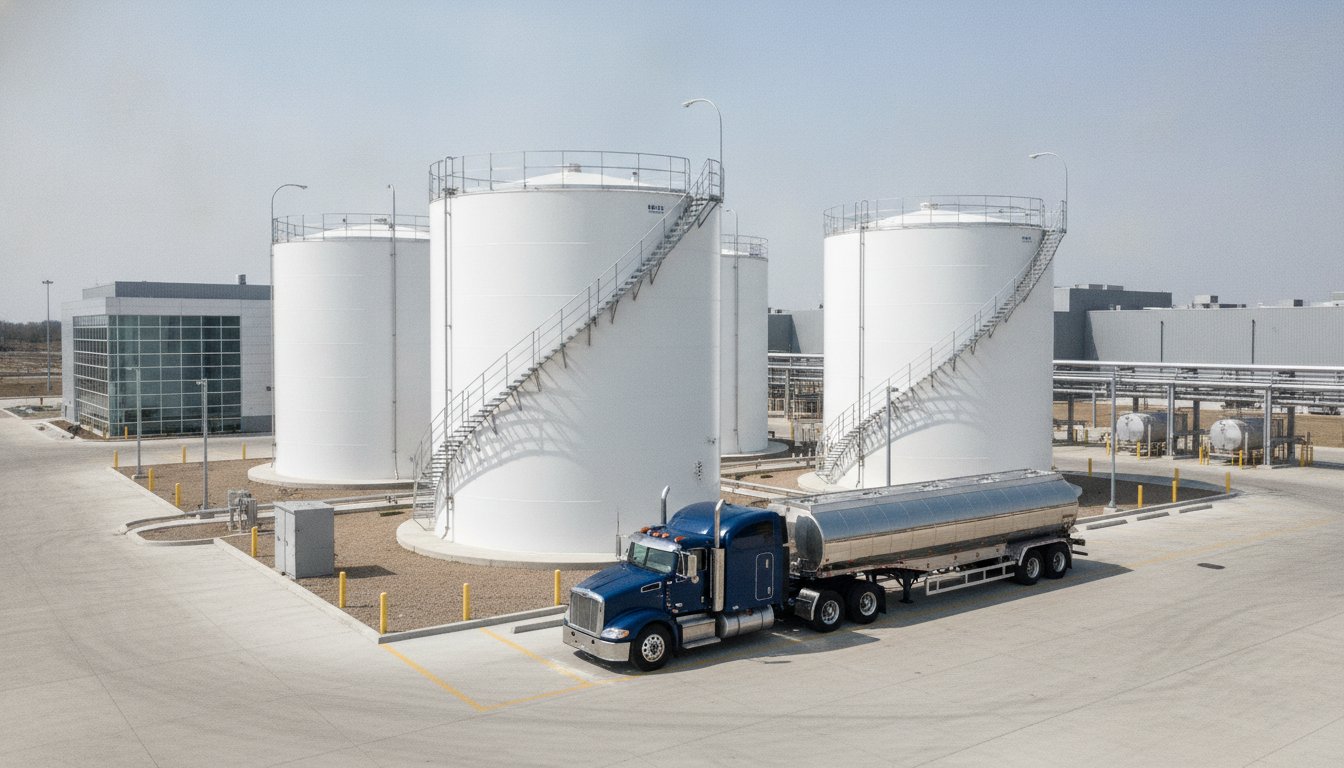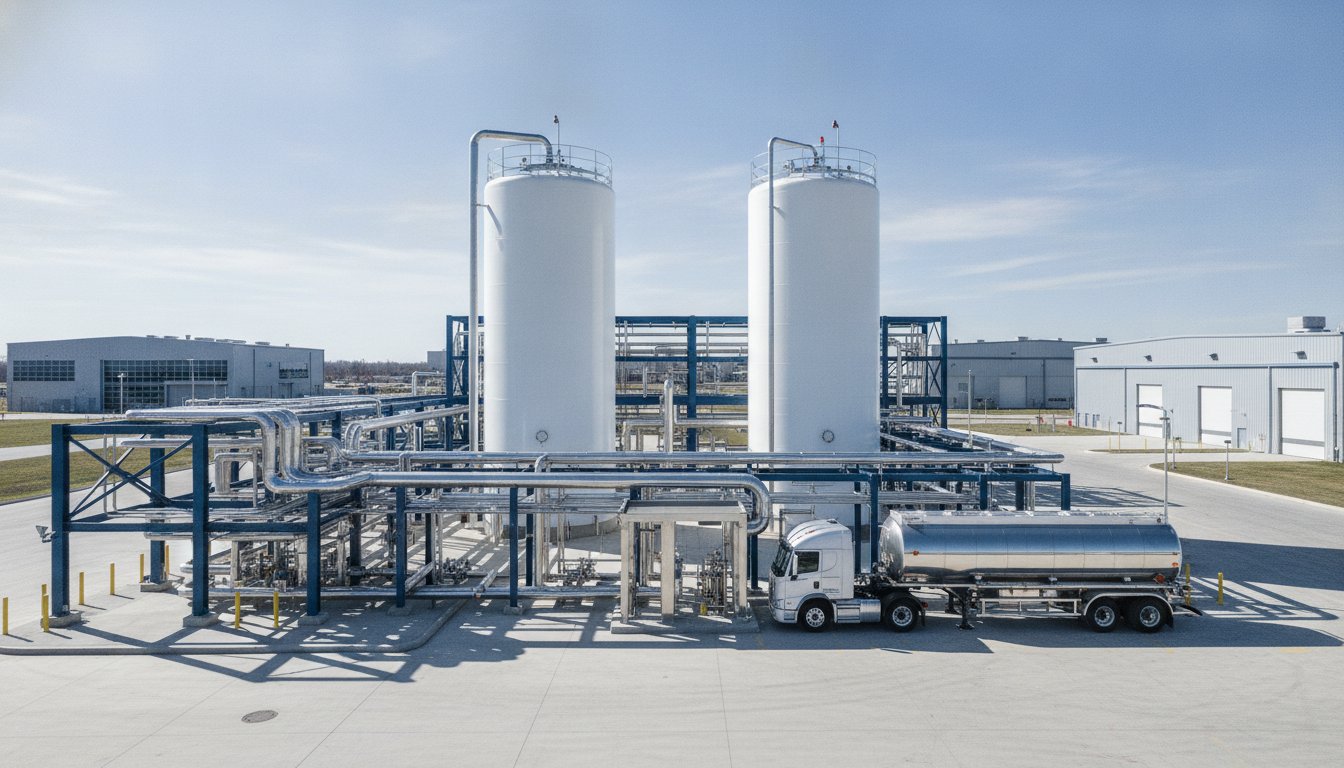
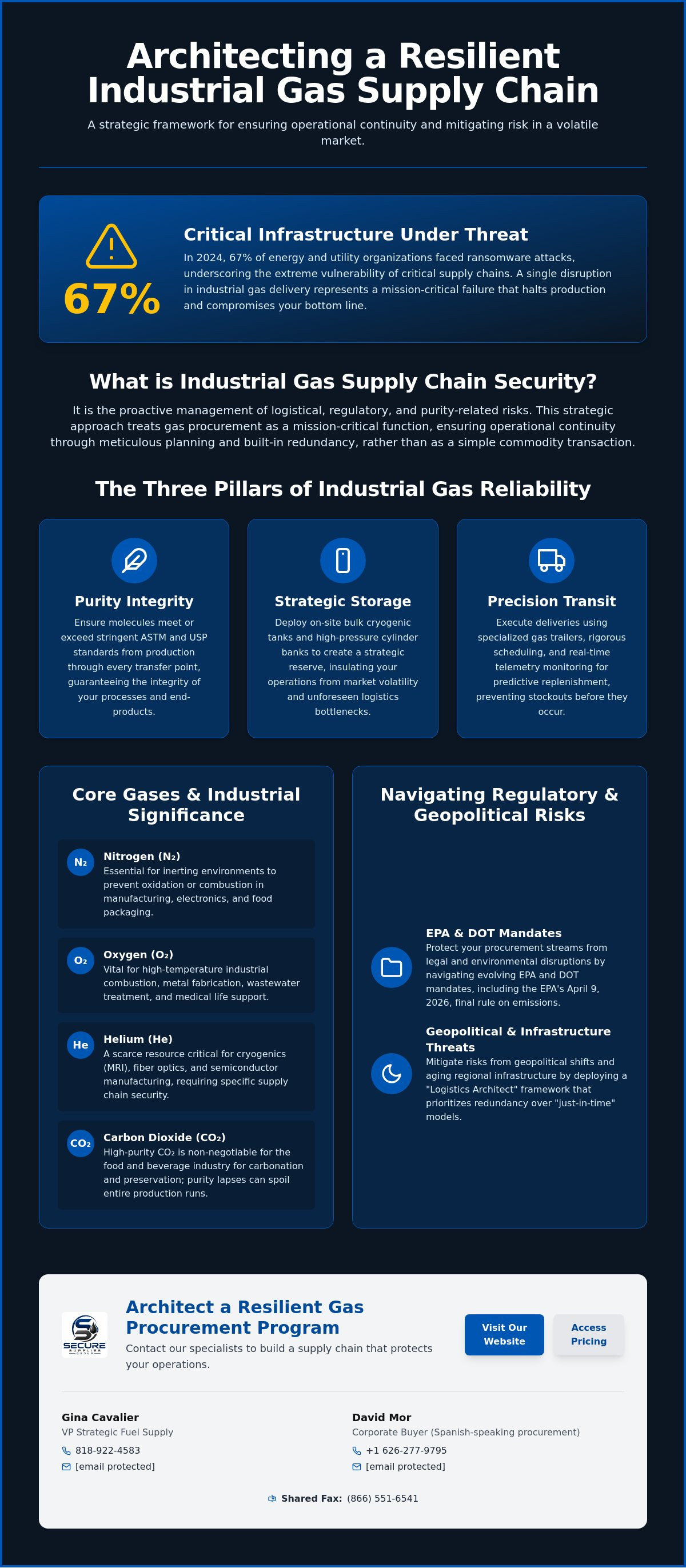
In 2024, 67% of energy and utility organizations faced ransomware attacks, a figure that underscores the extreme vulnerability of critical infrastructure. You've likely seen how a single delay in high-purity nitrogen or oxygen delivery isn't just a logistical hiccup. It represents a mission-critical failure that halts production and compromises your bottom line. Maintaining industrial gas supply chain security requires more than just a contract; it demands a strategic architecture built for a volatile market.
You'll learn how to architect a resilient supply chain that ensures gas purity and maintains strict regulatory compliance with the latest EPA and DOT standards. This article provides a roadmap for operational continuity, covering the impact of the EPA's April 9, 2026, final rule on emissions and the necessity of high-purity gas standards. We'll preview the essential steps to secure a reliable national procurement partner and mitigate the risks of unpredictable lead times and supply failure.
Key Takeaways
- Define industrial gas supply chain security through the proactive management of logistical, regulatory, and purity-related risks.
- Differentiate between industrial and medical-grade standards to maintain strict compliance with ASTM and USP requirements.
- Construct operational redundancy using the three pillars of reliability: purity integrity, strategic storage, and secure transit.
- Navigate evolving DOT and EPA mandates to protect procurement streams from legal and environmental disruptions.
- Deploy a "Logistics Architect" framework to integrate and secure gas supplies across multi-site industrial operations.
Defining Industrial Gas Supply Chain Security in a Volatile Market
Effective industrial gas supply chain security requires a proactive management strategy that addresses logistical, regulatory, and purity risks before they manifest as operational failures. It is no longer sufficient to treat gas procurement as a simple commodity transaction. In 2026, the complexity of global trade and the precision required in modern manufacturing demand a mission-critical mindset. An industrial gas serves as the invisible backbone for sectors ranging from aerospace to healthcare. This makes any disruption a catastrophic event for facility directors and engineers who rely on a steady flow of molecules to keep systems running.
Primary threats to continuity now include rapid geopolitical shifts and the steady aging of regional infrastructure. These factors create a volatile environment where supply failure is a constant risk. The EPA's final rule published on April 9, 2026, which amends emissions standards for gas facilities, adds another layer of regulatory complexity. Compliance isn't optional; it's a requirement for continued operation. Managing these variables requires a "logistics architect" approach, prioritizing redundancy and meticulous planning over reactive solutions.
The Economic Impact of Gas Supply Disruptions
Supply failures in high-precision sectors like semiconductor manufacturing or food processing carry staggering costs. A single hour of downtime in a microchip facility can result in millions of dollars in lost yield. The traditional "just-in-time" delivery model has proven inadequate under current industrial pressures. Facilities are now pivoting toward strategic reserve management. This shift moves operations away from lean inventories to ensure they maintain enough on-site volume to weather unforeseen logistics bottlenecks or sudden regulatory changes that might pause production at the source.
Core Gases and Their Industrial Significance
Nitrogen (N2) is essential for inerting environments to prevent oxidation or combustion, while Oxygen (O2) remains vital for both high-temp industrial combustion and medical life support. Helium (He) presents a unique challenge due to its extreme scarcity and the specific security requirements of its global supply chain. For the food industry, high-purity CO2 is non-negotiable; even minor purity lapses can spoil entire production runs. Maintaining the integrity of these molecules from the source to the point of use is the core objective of industrial gas supply chain security.
Contact Secure Supplies Group to architect a resilient gas procurement program for your facility:
Gina Cavalier, VP Strategic Fuel Supply
Phone: 818-922-4583
Email: [email protected]
David Mor, Corporate Buyer (Spanish-speaking procurement)
Phone: +1 626-277-9795
Email: [email protected]
Fax: (866) 551-6541
Visit securesupplies.us for more information or log in at login.securesupplies.us to access current pricing information.
The Three Pillars of Industrial Gas Reliability: Purity, Storage, and Transit
Reliability in gas procurement rests on three non-negotiable pillars. Failure in any one of these areas compromises your industrial gas supply chain security and risks immediate operational shutdown. A strategic framework treats purity, storage, and transit as an integrated system rather than isolated logistics tasks. Precision is the standard. Redundancy is the requirement.
- Pillar 1: Purity Integrity. Ensure molecules meet ASTM or medical-grade standards from the moment of production through every transfer point.
- Pillar 2: Strategic Storage. Deploy bulk cryogenic tanks and high-pressure cylinder banks to create an on-site buffer against market volatility.
- Pillar 3: Precision Transit. Execute deliveries using specialized gas trailers and rigorous scheduling to prevent stockouts.
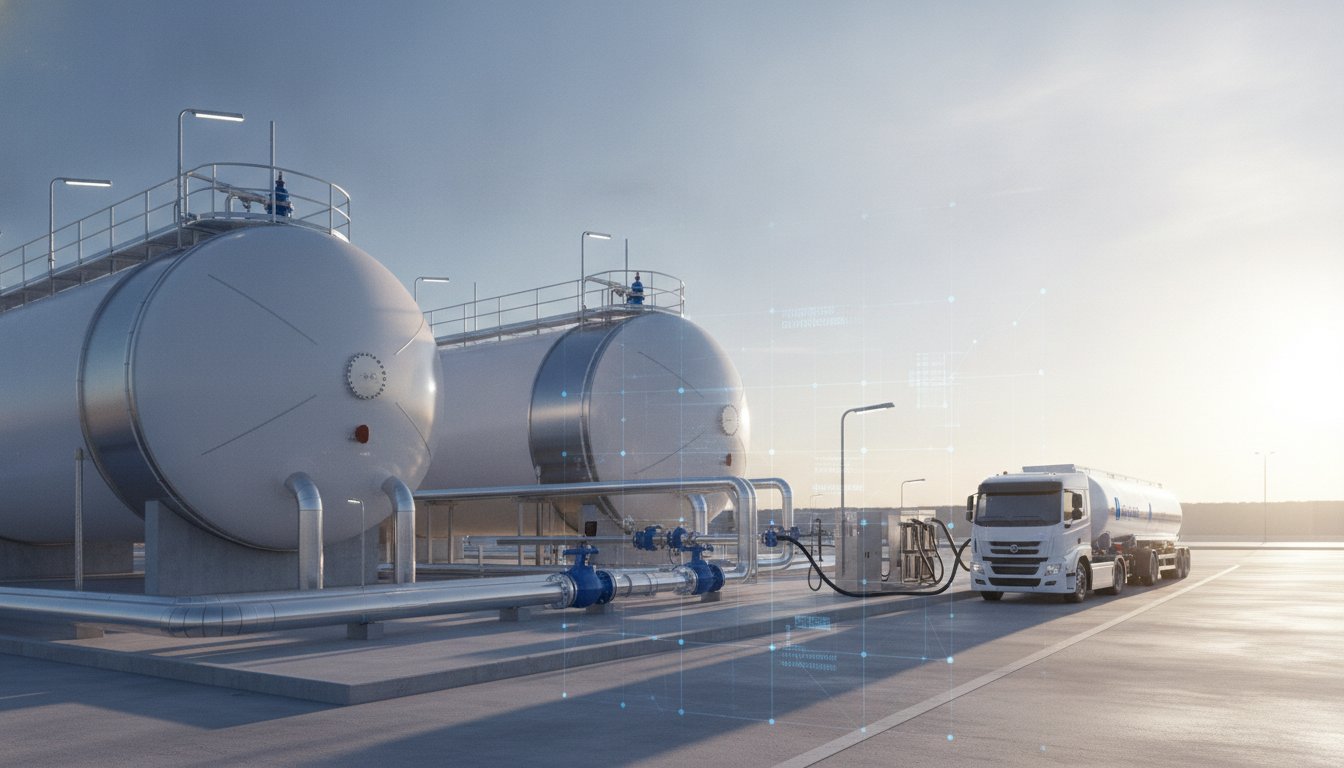
Modern security depends on telemetry. Remote tank monitoring provides real-time data, allowing for predictive replenishment before levels reach a critical low. This visibility aligns with federal efforts for Strengthening America's Industrial Supply Chains, ensuring that critical infrastructure remains resilient against both domestic and global disruptions.
Maintaining High-Purity Standards
High-purity and ultra-high-purity (UHP) gases require specialized handling to maintain 99.999% concentration or higher. Contamination most frequently occurs during the transfer process at the manifold or through degraded seals. Prevent these failures by adhering to strict ASTM quality control protocols. Regular testing at the point of delivery confirms that the gas remains within specification, protecting sensitive equipment from damage. If you need to upgrade your current delivery protocols, request a custom logistics assessment to identify potential purity gaps.
Advanced Storage Solutions for Industrial Continuity
On-site cryogenic storage offers the highest level of protection for large-scale operations. It provides a significant reserve that decouples your daily production from immediate transport delays. For smaller applications or emergency backup, high-pressure cylinder manifolds prevent single-point-of-failure scenarios. Diversifying your storage assets is a core component of Energy Infrastructure Projects designed to harden facilities against supply shocks. This architecture ensures that even if a primary delivery is delayed, your facility continues to operate without interruption.
Contact Secure Supplies Group to secure your industrial gas infrastructure:
Gina Cavalier, VP Strategic Fuel Supply
Phone: 818-922-4583
Email: [email protected]
David Mor, Corporate Buyer (Spanish-speaking procurement)
Phone: +1 626-277-9795
Email: [email protected]
Fax: (866) 551-6541
Visit securesupplies.us for comprehensive solutions or log in at login.securesupplies.us to access current pricing information.
Mitigating Regulatory and Geopolitical Risks in Gas Procurement
Procurement strategies in 2026 must account for a complex gauntlet of federal mandates and global instability. Relying on a single source or ignoring the nuances of transport law creates a fragile foundation for your operations. True industrial gas supply chain security is achieved when you anticipate regulatory shifts and decouple your facility from regional supply bottlenecks. This requires a transition from reactive purchasing to a model of geopolitical foresight and meticulous compliance tracking.
DOT and EPA Compliance Frameworks
The Department of Transportation (DOT) enforces strict Title 49 CFR requirements for the transit of high-pressure cylinders and cryogenic liquids. Every shipment must meet precise labeling, placarding, and securement standards to avoid heavy fines or transit delays. Beyond transport, the EPA's April 9, 2026, final rule has tightened emissions standards for facilities handling natural gas and industrial byproducts. Compliance audits now scrutinize everything from leak detection to waste management protocols. To ensure your facility maintains a robust safety culture and is prepared for such inspections, check out Guardian Safety for specialized health and safety training. Furthermore, the Greenhouse Gas Reporting Program requires industrial gas users to maintain transparent data on their consumption and emissions. Failing to align with these standards doesn't just risk a penalty; it risks a complete halt in your delivery schedule.
Geopolitical Foresight and Sourcing Strategy
Global markets for Helium and Nitrogen remain sensitive to international conflict and energy trade shifts. The ongoing "Helium Shortage 4.0" has demonstrated that relying on overseas extraction is a liability for critical infrastructure. Modern logistics architects prioritize domestic sourcing to insulate their facilities from these shocks. A recent analysis on Advancing Supply Chain Security in Oil and Gas highlights that cyber resilience and third-party risk management are now essential for maintaining industrial gas supply chain security. To protect your operations, you should review this High Purity Helium Supplier guide for insights on securing stable, long-term contracts. Multi-source procurement ensures that if one regional hub faces a bottleneck, your secondary and tertiary lines remain active.
Contact Secure Supplies Group to harden your procurement strategy against regulatory and geopolitical risks:
Gina Cavalier, VP Strategic Fuel Supply
Phone: 818-922-4583
Email: [email protected]
David Mor, Corporate Buyer (Spanish-speaking procurement)
Phone: +1 626-277-9795
Email: [email protected]
Fax: (866) 551-6541
Visit securesupplies.us for strategic support or log in at login.securesupplies.us to access current pricing information.
Industry-Specific Security: Medical vs. Industrial Manufacturing Requirements
The application of the molecule dictates the intensity of the security protocol. While a fabrication shop uses oxygen for cutting, a hospital uses it for life support. These distinct use cases require different levels of industrial gas supply chain security. Failure to recognize the specific regulatory and purity requirements of your industry can lead to catastrophic operational or legal consequences. A one size fits all approach to gas procurement is a liability you can't afford.
Securing the Medical Gas Supply Chain
Medical-grade liquid oxygen (USP) and nitrogen (NF) are classified as prescription drugs by the FDA. This classification mandates a documented chain of custody and rigorous lot tracking that industrial grades don't require. Every cylinder and bulk tank must meet United States Pharmacopeia standards for purity and labeling. During regional emergencies or supply shortages, medical facilities are legally granted logistical priority. We architect delivery schedules that prioritize these mission-critical sites to ensure life-support systems never fail. For medical research centers, liquid nitrogen supply for cryopreservation is equally vital. A single missed delivery can result in the irreparable loss of biological samples and decades of research data.
Food-grade CO2 also requires a specialized security framework. It must be free of sulfur, benzene, and hydrocarbons to prevent product contamination and ensure food safety. A lapse in CO2 purity integrity doesn't just halt production; it triggers expensive product recalls and damages brand reputation. Establishing a dedicated delivery program for these sensitive applications is the only way to guarantee purity from the source to the point of use.
Industrial Manufacturing and Large-Scale Fleet Needs
Industrial manufacturing sites often require the integration of gas supply with broader energy programs. In large-scale trucking and logistics, nitrogen is essential for tire maintenance to extend tire life and improve fuel economy. This procurement often overlaps with the need for DEF / AdBlue Supply to comply with EPA Tier 4 emission standards. Managing these distinct streams under a unified logistics framework reduces administrative burden and ensures that your fleet remains operational. Request a specialized gas delivery program to secure your facility's specific requirements and streamline your procurement process.
Contact Secure Supplies Group to architect a resilient gas procurement program for your facility:
Gina Cavalier, VP Strategic Fuel Supply
Phone: 818-922-4583
Email: [email protected]
David Mor, Corporate Buyer (Spanish-speaking procurement)
Phone: +1 626-277-9795
Email: [email protected]
Fax: (866) 551-6541
Visit securesupplies.us for more information or log in at login.securesupplies.us to access current pricing information.
Implementing a Resilient Gas Logistics Program with Secure Supplies Group
Establishing a resilient procurement framework requires moving beyond transactional purchasing and adopting a "Logistics Architect" mindset. Secure Supplies Group doesn't just act as a vendor; we design the logistical infrastructure that supports your entire operation. This approach ensures industrial gas supply chain security by identifying vulnerabilities in your current setup and replacing them with redundant, high-capacity solutions. We prioritize long-term stability through high-volume, multi-year contracts that protect your facility from the price spikes and supply shortages seen throughout 2026.
Securing a multi-year agreement provides the foresight needed for complex budgeting and operational planning. These contracts are built on a foundation of transparency and reliability, ensuring that your molecules are reserved even when market demand outstrips regional production capacity. By integrating your gas needs into a strategic procurement program, you insulate your facility from the "spot market" volatility that often leads to operational downtime.
Nationwide Distribution and Multi-Site Management
Multi-site industrial operations often struggle with regional vendor inconsistencies and fragmented delivery schedules. We manage nationwide distribution without regional bias, ensuring that a facility in California and a plant in Texas receive the same high-purity standards and delivery precision. Our single-point-of-contact model eliminates the administrative friction of managing multiple vendors and disparate invoicing systems. Review our specific Industrial Gases & Hydrogen capabilities to see how we provide uniform industrial gas supply chain security across your entire national footprint.
Strategic Infrastructure and Emergency Preparedness
Security is as much about physical infrastructure as it is about logistics. We integrate gas supply with comprehensive energy infrastructure project management, ensuring your storage tanks, vaporizers, and manifolds are optimized for maximum uptime. For high-stakes environments like data centers, we maintain rigorous emergency replenishment protocols. These Data Center Energy Programs provide the necessary gases for fire suppression and cooling systems, backed by a logistics network ready to respond to infrastructure failures or regional grid instability. We ensure that your critical systems remain pressurized and functional regardless of external market conditions.
Contact Secure Supplies Group to architect a resilient gas procurement program for your facility:
Gina Cavalier, VP Strategic Fuel Supply
Phone: 818-922-4583
Email: [email protected]
David Mor, Corporate Buyer (Spanish-speaking procurement)
Phone: +1 626-277-9795
Email: [email protected]
Fax: (866) 551-6541
Visit securesupplies.us for strategic support or log in at login.securesupplies.us to access current pricing information.
Securing Your Operational Future in a Volatile Market
Maintaining industrial gas supply chain security requires a shift from reactive purchasing to strategic architecture. You've seen how the three pillars of purity, storage, and transit form the foundation of reliability. Adherence to evolving EPA and DOT standards isn't just a legal necessity. It's a competitive advantage that prevents costly operational downtime. Secure Supplies Group provides national supply chain coverage and specialized procurement for both medical and industrial grades. We ensure full compliance with ASTM and USP standards across every multi-site operation. Contact our strategic team today to architect a resilient gas procurement program that protects your critical infrastructure.
Gina Cavalier, VP Strategic Fuel Supply
818-922-4583 | [email protected]
David Mor, Corporate Buyer (Spanish-speaking procurement)
+1 626-277-9795 | [email protected]
Fax: (866) 551-6541
For more information, visit securesupplies.us or log in at login.securesupplies.us to access current pricing information. Your operations deserve a partner that values stability and preparedness as much as you do.
Frequently Asked Questions
What is the difference between industrial-grade and medical-grade nitrogen supply?
Medical nitrogen (NF) is a pharmaceutical-grade product that must comply with United States Pharmacopeia (USP) standards and FDA lot-tracking requirements. It's used in clinical environments and cryopreservation. Industrial nitrogen is typically used for inerting or tire inflation and doesn't carry the same stringent documentation or pharmaceutical purity certifications. We provide both grades through dedicated delivery streams to prevent cross-contamination and ensure regulatory compliance.
How does Secure Supplies Group ensure high-purity helium availability during global shortages?
We mitigate global helium shortages by prioritizing domestic sourcing and securing long-term supply agreements. This "Logistics Architect" approach ensures our contract clients receive priority allocation even when spot-market availability collapses. By diversifying our supply lines, we insulate your facility from the volatility of "Helium Shortage 4.0" and ensure that high-purity molecules are always available for critical manufacturing and research applications.
What DOT regulations govern the transport of bulk industrial gases in the United States?
Bulk gas transit in the United States is governed by Title 49 CFR of the Department of Transportation (DOT) regulations. These mandates cover everything from cylinder testing intervals to hazardous material placarding and driver training. Compliance is essential for industrial gas supply chain security as it prevents transit delays and legal liabilities. We manage all DOT documentation and safety protocols to ensure your gas shipments arrive without regulatory interference.
Can Secure Supplies Group manage gas supply for multi-site national manufacturing fleets?
Yes, we specialize in multi-site national procurement. Our single-point-of-contact model allows facility directors to manage gas requirements across various states through one centralized platform. This ensures uniform purity standards and delivery precision for manufacturing fleets, regardless of their location. We eliminate the administrative burden of managing multiple regional vendors while maintaining a consistent and reliable supply chain for your entire operation.
How does remote tank monitoring improve industrial gas supply chain security?
Telemetry provides real-time inventory visibility that is foundational to industrial gas supply chain security. By monitoring tank levels remotely, we can trigger automatic replenishment before your supply reaches a critical threshold. This data-driven approach eliminates the risk of human error in inventory tracking and ensures your production lines never halt due to an unforeseen stockout or a logistical bottleneck.
What are the ASTM standards for food-grade CO2 procurement?
Food-grade CO2 must adhere to specific ASTM standards defining purity levels for beverage and food processing. These standards require the gas to be free of sulfur, benzene, and other hydrocarbons that could compromise food safety. We maintain a documented chain of custody and conduct regular purity testing at the point of delivery to ensure every shipment meets these rigorous quality control requirements.
How do geopolitical factors currently impact the price of bulk nitrogen?
Bulk nitrogen prices are closely linked to natural gas spot prices and global energy trade. As of July 1, 2026, the spot gas national average was $2.655/MMBtu, but the EIA forecasts Henry Hub spot prices to average $3.34/MMBtu in the second half of 2026. Geopolitical instability in energy-producing regions can cause sudden price volatility. We help clients navigate this through fixed-price, multi-year contracts that provide cost certainty.
What is the typical SLA for emergency medical oxygen delivery in a mission-critical scenario?
Typical SLAs for emergency medical oxygen are customized based on the facility’s specific risk profile and mission-critical requirements. We architect delivery programs that provide expedited response times during regional emergencies or infrastructure failures. These agreements ensure that life-support systems in hospitals and care facilities remain pressurized and operational. Our strategic logistics network is designed to bypass regional bottlenecks to meet these urgent clinical needs.
Contact Secure Supplies Group to secure your industrial gas procurement and logistics management:
Gina Cavalier, VP Strategic Fuel Supply
Phone: 818-922-4583
Email: [email protected]
David Mor, Corporate Buyer (Spanish-speaking procurement)
Phone: +1 626-277-9795
Email: [email protected]
Fax: (866) 551-6541
Visit securesupplies.us for more information or log in at login.securesupplies.us to access current pricing information.
Disclaimer
The information provided in this article is for general informational purposes only and does not constitute professional, legal, safety, or financial advice. Fuel and energy product specifications, pricing, availability, and regulatory requirements vary by location, application, and over time, and may differ from the general information presented here. Secure Supplies makes no warranties regarding the accuracy, completeness, or current applicability of this content. Handling, storage, and use of fuels and industrial gases can be hazardous and should always follow applicable laws, manufacturer guidance, and qualified professional advice. For current specifications, pricing, and tailored supply solutions, please contact Secure Supplies directly.